
Introduction: “Natural” Does Not Always Mean “Untreated”
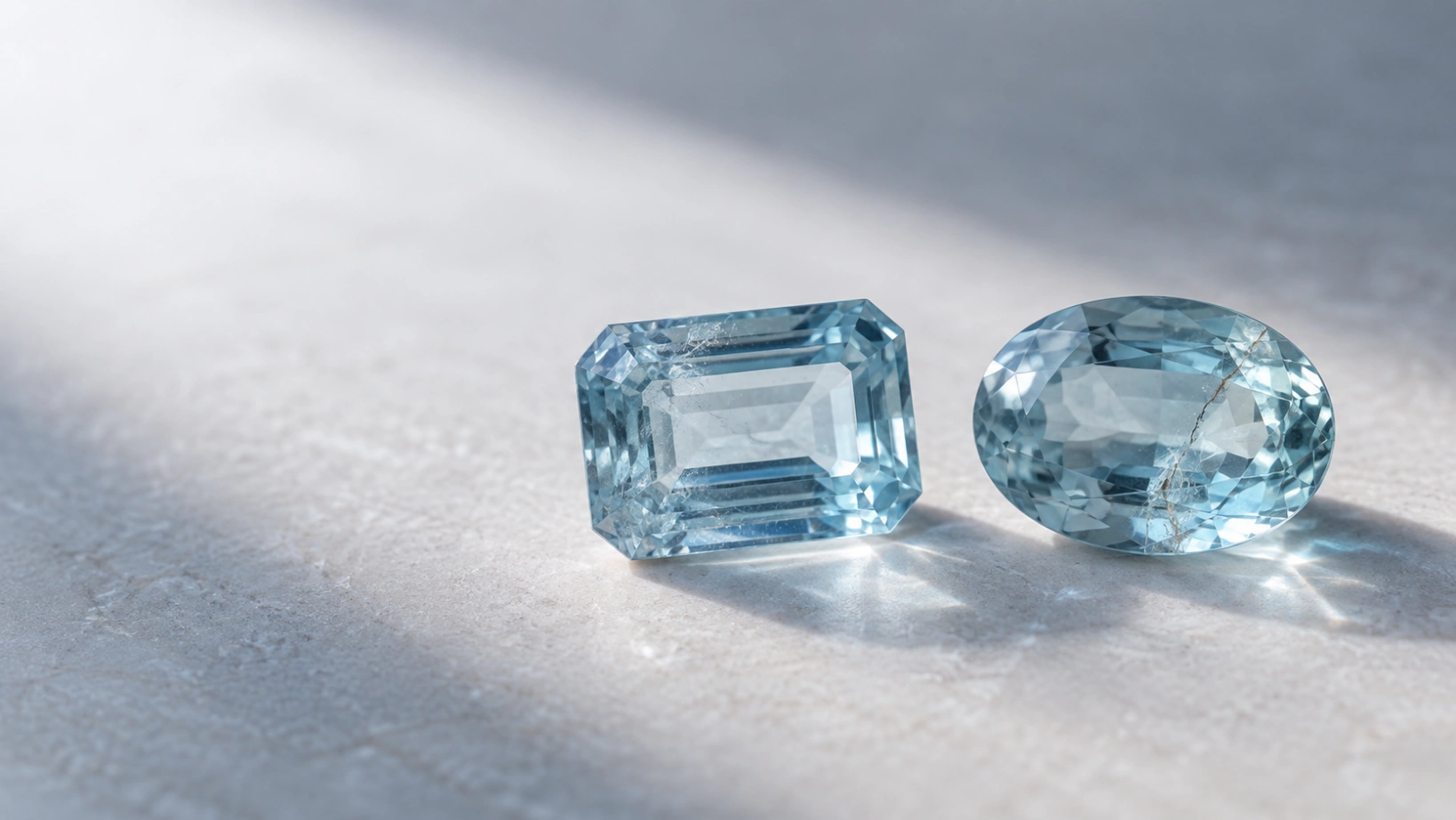
Aquamarine is admired for its transparent blue to slightly greenish-blue color and clean, watery appearance. Because clarity is especially important in aquamarine, a seller may describe a stone as “filled,” “fracture-filled,” or “clarity enhanced” when a transparent material has been introduced into surface-reaching fractures or cavities to make them less visible.
This creates an important distinction. Natural aquamarine generally means aquamarine that was mined rather than laboratory-grown or imitated. It does not automatically mean the stone has never been treated. A natural aquamarine can be heated, fracture-filled, or otherwise enhanced. A filled aquamarine may still be natural mined aquamarine, but its clarity has been modified by a treatment that should be disclosed.
The central question is therefore not simply, “Is this aquamarine real?” It is:
Is the stone natural or laboratory-grown, has it been clarity-enhanced, what material was used, and has the treatment been clearly disclosed?
1. Natural Aquamarine and Filled Aquamarine: The Core Difference
Aquamarine is the blue to slightly greenish-blue variety of beryl. Fine aquamarine is valued for a combination of color, transparency, and clarity. Most faceted aquamarine is expected to be eye-clean, so visible fractures can have a significant effect on appearance and value.
Natural aquamarine is mined aquamarine whose identity is not the result of a laboratory growth process or imitation. It may contain natural inclusions, internal fractures, growth features, or small cavities. Some natural aquamarines are untreated, while others may have undergone a disclosed treatment.
Filled aquamarine is aquamarine in which a filler has been introduced into a surface-reaching fracture or cavity. The filler may be a polymer, resin, glass, wax, or oil, depending on the material and process. The purpose is to reduce the apparent visibility of the fracture, improve apparent clarity, and sometimes improve the stone’s apparent stability.
The treatment does not remove the original fracture. It makes the fracture less noticeable by changing the way light passes through the opening. This is why a filled stone should not be described as naturally flawless.
Comparison at a Glance
|
Feature
|
Natural, untreated aquamarine
|
Filled aquamarine
|
|
What “natural” describes
|
Mined aquamarine formed by natural geological processes
|
Usually also mined aquamarine, but clarity has been enhanced after mining
|
|
Internal condition
|
Natural inclusions and fractures may remain visible
|
One or more surface-reaching fractures or cavities contain filler
|
|
Main purpose
|
No clarity treatment has been identified
|
Reduce the apparent visibility of fractures and improve apparent clarity
|
|
Appearance
|
Transparency reflects the stone’s natural internal features
|
May appear unusually clean in relation to its price or may show filled fissures under magnification
|
|
What remains unchanged
|
The material is still aquamarine beryl
|
The original fracture remains present beneath or around the filler
|
|
Professional clues
|
Natural growth features and inclusions
|
Flash effect, relief lines, filler-related features, or other treatment evidence may appear under a microscope
|
|
Care
|
Warm soapy water is generally safe
|
Warm soapy water only; avoid heat, solvents, steam, and ultrasonic cleaning unless a professional confirms safety
|
|
Disclosure
|
State natural and untreated only when supported
|
Clearly disclose “fracture-filled,” “polymer-filled,” or the specific known treatment
|
|
Value context
|
Usually compared with stones of similar color, clarity, size, and provenance
|
Treatment status may affect value and should be reflected in the description and price
|
2. What Does “Filled” Mean in Gemology?
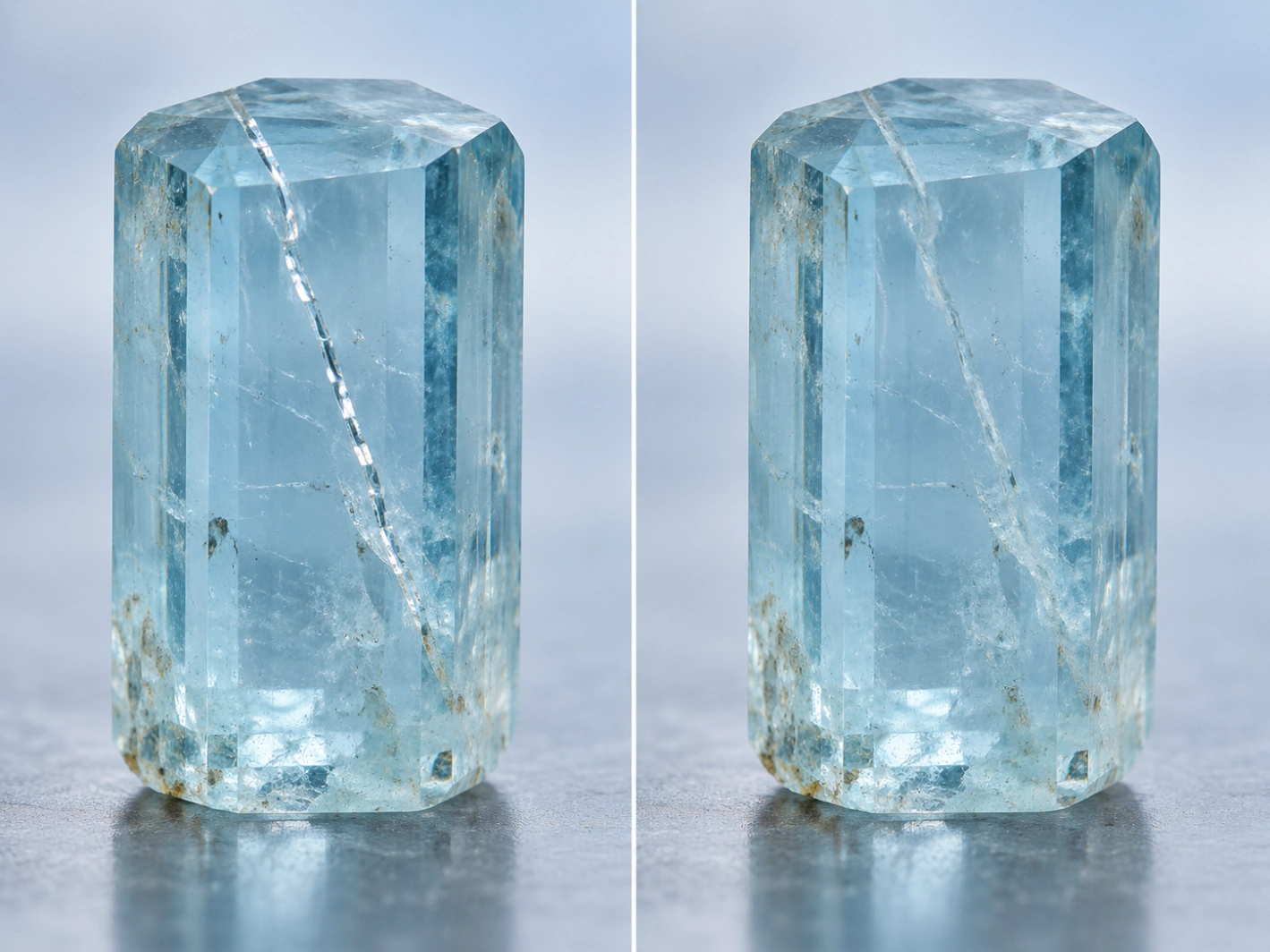
In gemology, fracture filling means filling a surface-reaching fracture or cavity with a material that reduces its visibility. GIA describes possible fillers as glass, resin, wax, or oil. Most fillers are colorless, although colored materials may be treated as dyes rather than simple clarity fillers.
A surface-reaching fracture is an opening that extends from the interior of the stone to its surface. It can scatter light and appear as a white line, veil, crack, or reflective feature. When a filler occupies part of the opening, the visual contrast between the fracture and the surrounding aquamarine may be reduced.
The treatment can improve appearance, but it does not give the stone the same internal condition as an untreated, naturally clean aquamarine. The fracture is still part of the stone’s structure, and the filler may have its own stability and care requirements.
A filler hides or reduces the visibility of a fracture; it does not erase the fracture.
3. Why Might Aquamarine Be Fracture-Filled?
Aquamarine naturally forms in large crystals and is often transparent. At the same time, rough material can contain fractures that reduce the amount of clean, facetable material available. Because the market places a strong emphasis on transparency, clarity enhancement can make lower-clarity material appear more attractive.
The commercial incentive is straightforward. If a filled fracture becomes less visible, a stone may look cleaner and brighter than it did before treatment. This does not automatically make the stone fraudulent or worthless. It does mean that the buyer should know the treatment before comparing the stone with untreated aquamarine.
GIA’s study of polymer-filled aquamarine reported hundreds of examples encountered in the Chinese jewelry market. The study demonstrates that this is a documented treatment encountered in trade, not merely a theoretical possibility.
4. How Is Polymer Filling Detected?
Treatment identification is normally a professional task. GIA reports that polymer-filled aquamarine can show characteristic features under a standard gemological microscope, including a flash effect and relief lines.
A flash effect is a bright, often iridescent-looking reflection that can appear when the viewing angle or lighting changes across a filled fracture. Relief lines can reveal a difference between the filler and the surrounding beryl. These features may be subtle and should not be interpreted without training.
Some filled fractures in the GIA study showed a chalky-white fluorescence under long-wave ultraviolet light. This is a laboratory clue, not a reliable home identification method. A UV reaction by itself does not prove that a stone is filled, because different materials and treatments can produce different reactions.
Fourier-transform infrared spectroscopy, usually called FTIR, can provide additional evidence. In the GIA study, polymer-related absorption features appeared in the approximately 3100–2850 cm⁻¹ region. This type of analysis is performed with laboratory equipment and should not be confused with a consumer UV flashlight test.
What a Professional Report May Address
Depending on the laboratory and service requested, a report may identify whether the material is natural or laboratory-grown and may list detectable treatments. GIA states that its Colored Stone Identification Report can assess an aquamarine’s characteristics and indicate whether it is natural or laboratory-grown, together with detectable treatments.
For a valuable aquamarine, ask whether the report specifically addresses fracture filling or clarity enhancement. A basic identification of “aquamarine” is not necessarily the same as a complete treatment statement.
5. What Can You Notice Without a Laboratory?
A buyer can observe a few warning signs, but none is conclusive on its own.
A stone that appears exceptionally clean while being offered at an unusually low price deserves more questions. GIA notes that fine aquamarine is rare and valuable, especially when it combines strong color, transparency, and larger size. Price is not a test, but an unusually favorable combination of size, color, clarity, and price should encourage the buyer to ask about treatment.
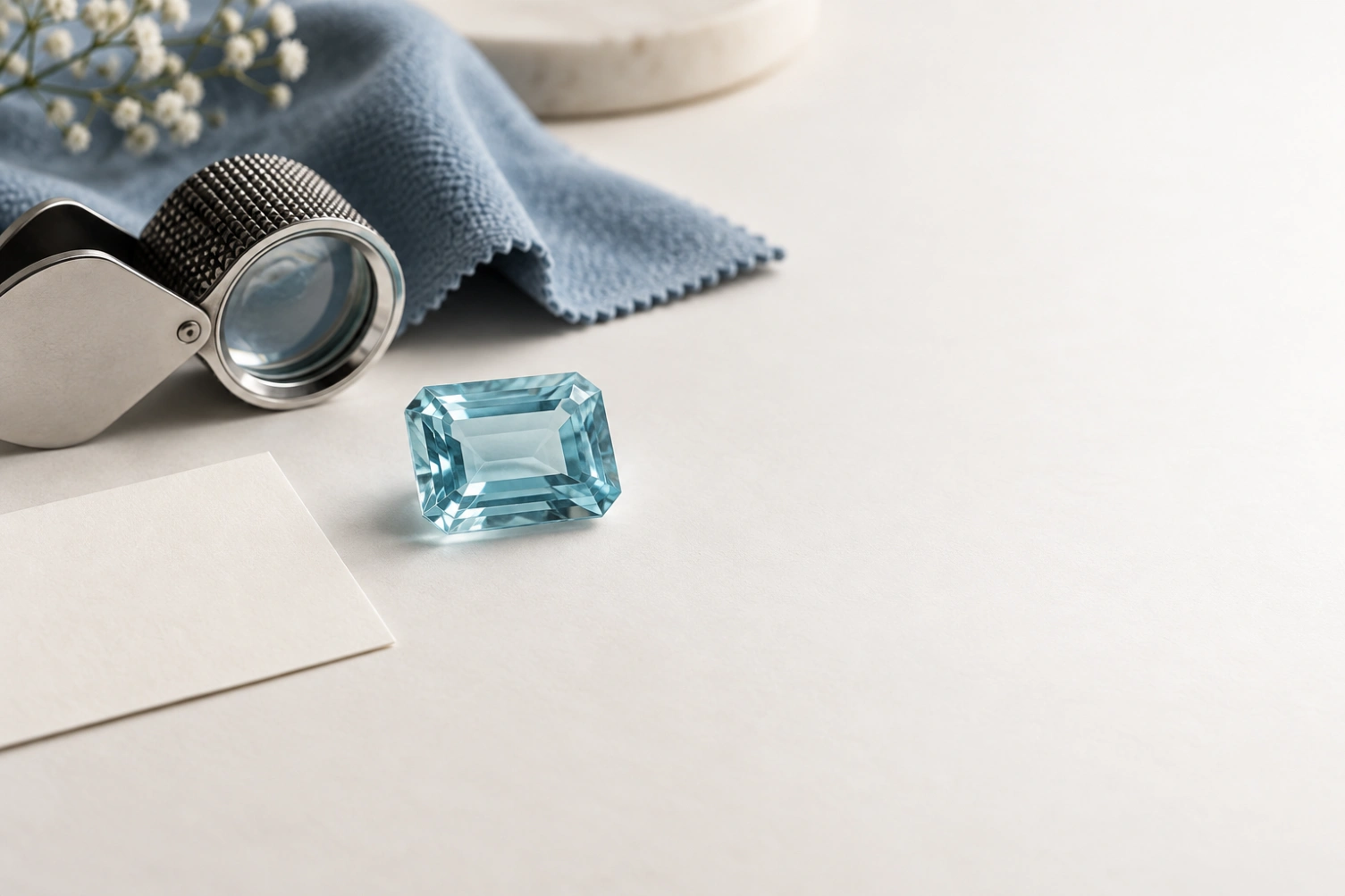
Under a loupe, a fracture may show an unnatural bright flash, a surface-reaching line, or an irregular reflective effect. However, ordinary internal reflections, polishing marks, liquid inclusions, and natural fractures can look confusingly similar. A photograph or short video is not enough to make a reliable diagnosis.
A particularly important caution is this: clean appearance does not prove filling. Some aquamarine is naturally very clear, and some filled material may not look perfectly clean. The same visual feature can have more than one explanation.
6. Natural Does Not Mean Untreated
This distinction is essential for product descriptions and customer communication.
The word natural answers the question, “Was the aquamarine formed in nature and mined?” The word untreated answers a different question, “Has no enhancement been identified?” A natural stone can be heated, filled, coated, dyed, or otherwise treated. Treatment status must be stated separately.
Heat treatment and fracture filling should also not be treated as the same process. GIA describes heat treatment of aquamarine as stable, while fracture-filled aquamarine should be cleaned only with warm soapy water. Heat changes the stone’s color; filling changes the apparent visibility of an opening or fracture.
|
Description
|
What the buyer should understand
|
|
Natural aquamarine
|
Mined aquamarine; treatment status should still be stated separately
|
|
Natural, untreated aquamarine
|
Mined aquamarine with no treatment identified, preferably supported by a report or reliable disclosure
|
|
Heat-treated aquamarine
|
Natural aquamarine whose color has been modified by heat; the treatment should be disclosed
|
|
Fracture-filled aquamarine
|
Usually natural aquamarine whose surface-reaching fractures or cavities contain filler
|
|
Laboratory-grown aquamarine
|
Beryl grown in a laboratory, not mined material; must be identified clearly as laboratory-grown
|
|
Imitation aquamarine
|
A different material made to resemble aquamarine; must be described as imitation or simulated
|
7. Buying Advice: Questions to Ask the Seller
Before buying, ask for a direct answer to the following questions:
1.Is the stone mined natural aquamarine, laboratory-grown material, or an imitation?
2.Is it untreated, heat-treated, fracture-filled, polymer-filled, or treated in another way?
3.If it is filled, what type of filler is known or suspected to be present?
4.Does the product photograph show the exact stone rather than a representative example?
5.Is the treatment stated in the product title, description, invoice, and certificate when applicable?
6.What cleaning and repair restrictions apply?
7.For a high-value purchase, is an independent gemological report available?
The FTC Jewelry Guides state that sellers should disclose treatments when a treatment is not permanent, requires special care, or significantly affects the value of the gemstone. They also recommend disclosure at the online point of sale when a consumer cannot inspect the actual stone in person.
Clear disclosure is not an attack on treated aquamarine. It is a way to ensure that buyers compare like with like. A filled aquamarine may be attractive and suitable for a particular purpose, but it should not be priced or represented as though it were a comparable untreated stone with the same clarity history.
8. Care and Repair: The Most Important Practical Difference
GIA recommends warm soapy water for cleaning fracture-filled aquamarine. This conservative approach is important because fillers may react differently to heat, solvents, steam, or vibration.
For a filled aquamarine, avoid ultrasonic cleaners, steam cleaners, strong solvents, alcohol, acetone, and sudden high heat unless a qualified professional has confirmed that the specific stone and setting can tolerate them. Do not place a filled stone in a jeweler’s torch area or expose it to high-temperature repair without disclosing the treatment history.
If a ring or pendant requires resizing, retipping, soldering, repolishing, or resetting, tell the jeweler that the stone may be fracture-filled. Heat and chemicals can damage the filler, make the treatment more visible, or create new problems in the filled fracture.
Natural untreated aquamarine is also not indestructible. It can still chip, scratch, or fracture under impact. The difference is that filled aquamarine has an additional treatment-related vulnerability that should guide cleaning and repair decisions.

Final Thoughts: Transparency Is Part of the Stone’s Story
Natural aquamarine is valued for the combination of geological origin, blue color, transparency, and clarity. Filled aquamarine can offer an appealing appearance at a different price point, but the fracture-filling treatment is part of the stone’s story and should not be hidden.
The most useful distinction is not “good aquamarine versus bad aquamarine.” It is untreated versus treated, clearly described versus vaguely described, and appropriate care versus avoidable damage.
At The Infinite Crystal, we believe that appreciating crystals includes understanding both their natural beauty and the processes that may have changed their appearance. When treatment information is clear, collectors and jewelry lovers can make choices based on their own preferences, budgets, and care expectations.


