
Introduction
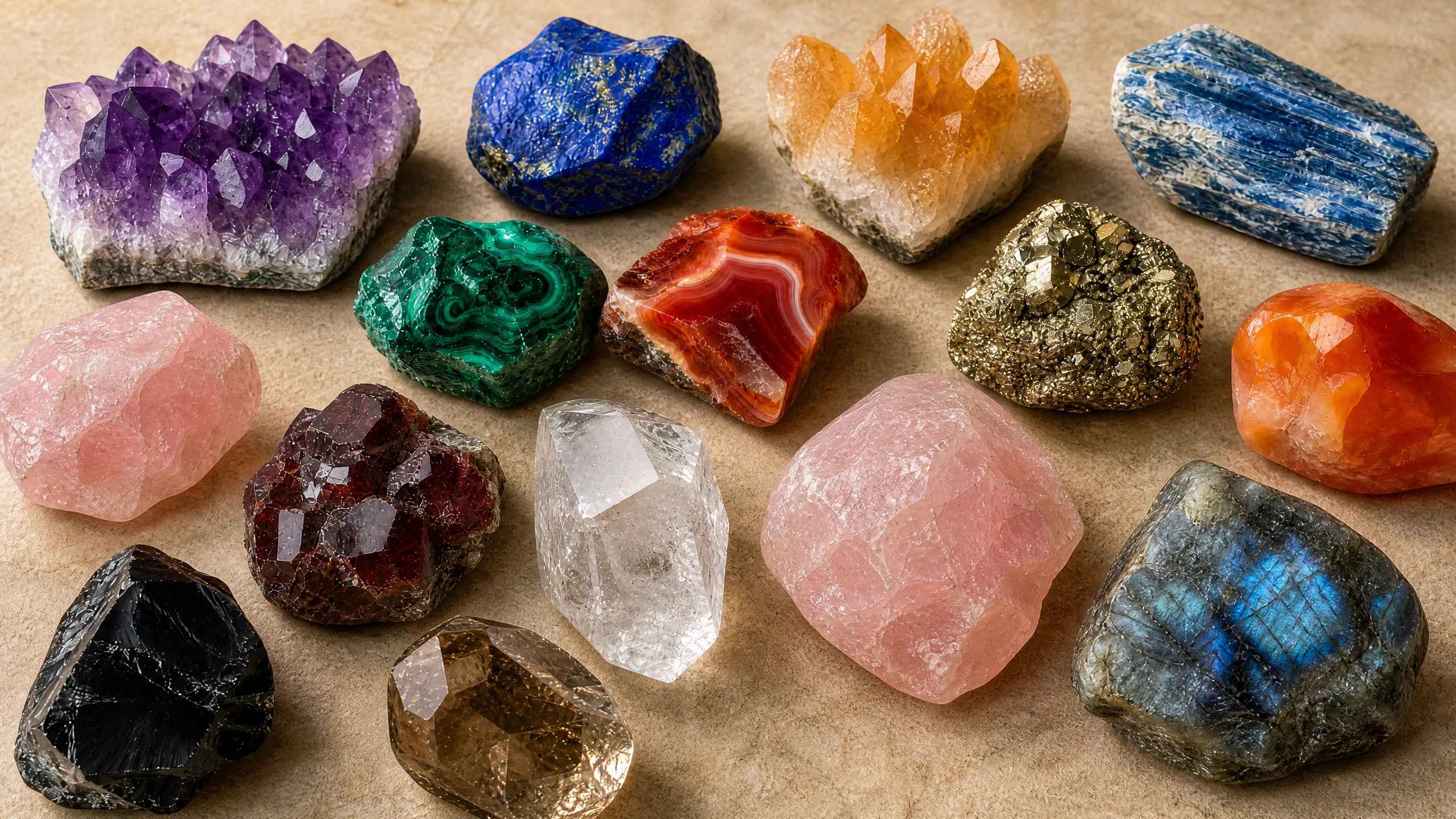
When we hold a natural crystal, color is often the first feature we notice: the violet of amethyst, the green of malachite, the golden tone of citrine, or the blue-green flash of labradorite. Color shapes a mineral’s visual identity and influences the emotions and associations we bring to it. Scientifically, however, crystal color is rarely caused by one simple factor. It may result from essential chemical elements, trace impurities, lattice defects, microscopic inclusions, or optical structures within the mineral.
Why Do Natural Crystals Have Different Colors?
Chemical Composition and Trace Elements
Color begins with light. White light contains many wavelengths. When light enters a mineral, some wavelengths are absorbed, while the remaining wavelengths are reflected or transmitted to our eyes and interpreted by the brain as color. Even a small amount of a particular element can therefore have a visible effect.
Transition-metal ions—including titanium, vanadium, chromium, manganese, iron, cobalt, nickel, and copper—are common sources of mineral color. Their electronic structures allow them to absorb selected parts of visible light. The same element can also produce different colors in different crystal structures. The Miles Mineral Museum explains this with ruby and emerald: both may be colored by chromium ions, yet ruby is red and emerald is green because the surrounding crystal chemistry and bonding environment differ.
Lattice Defects and Color Centers
Natural crystals are not always perfect geometric lattices. Missing ions, excess electrons, and other structural irregularities can change how a mineral absorbs light. These defect-related features are often called color centers. Purple fluorite, for example, can owe its color to lattice defects and associated electronic states; heating may restore part of the structure and cause the color to fade.
Inclusions, Impurities, and Fine Mixtures
A crystal’s visible color may come from tiny inclusions or microscopic particles of another mineral. Small amounts of red hematite can color feldspar, calcite, or jasper, while green chlorite inclusions can color quartz. In such cases, the color is not necessarily produced by the dominant mineral formula alone. It may also preserve a visual record of the geological environment in which the specimen formed.
Optical Structures and Iridescence
Some minerals display more than a fixed body color. Their appearance may shift with viewing angle or illumination because of interference, layering, or other fine structures. The rainbow play of precious opal is linked to the interaction of light with regularly arranged submicroscopic particles. Moonstone and labradorite also display optical effects related to internal structures and intergrowths.
Common Crystal Colors and Their Traditional Meanings
Color meanings vary across cultures and belief systems. The following sections are therefore a cultural and aesthetic guide—not a medical efficacy chart.
Red Crystals
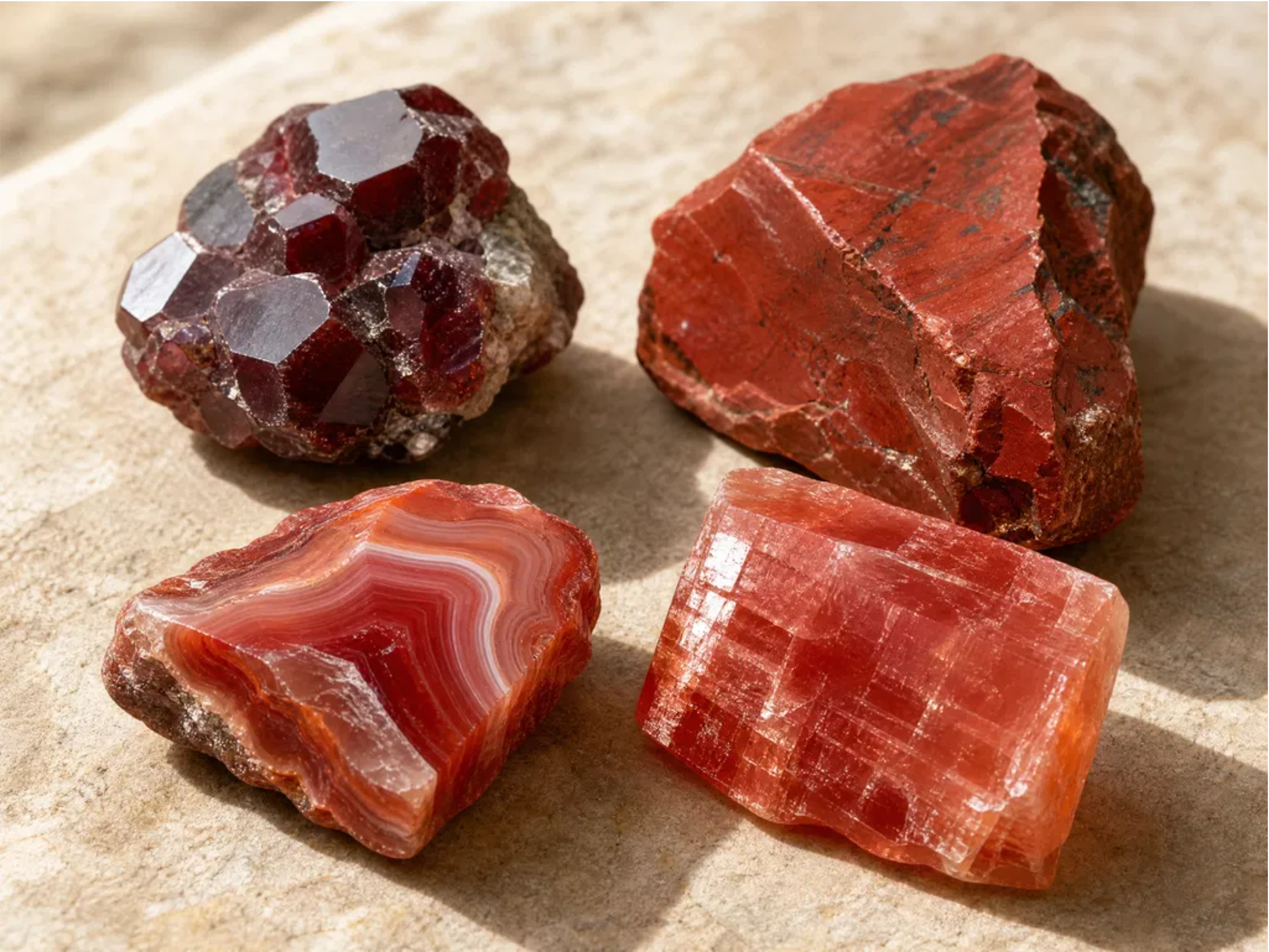
Common red crystals include garnet, red jasper, red agate, and red calcite. In crystal traditions, red is often associated with vitality, action, passion, courage, and life force. When observing a red specimen, examine its color zoning, tonal variation, and natural texture. Red may arise from iron, manganese, or mineral inclusions, so color alone cannot identify the stone.
Orange Crystals
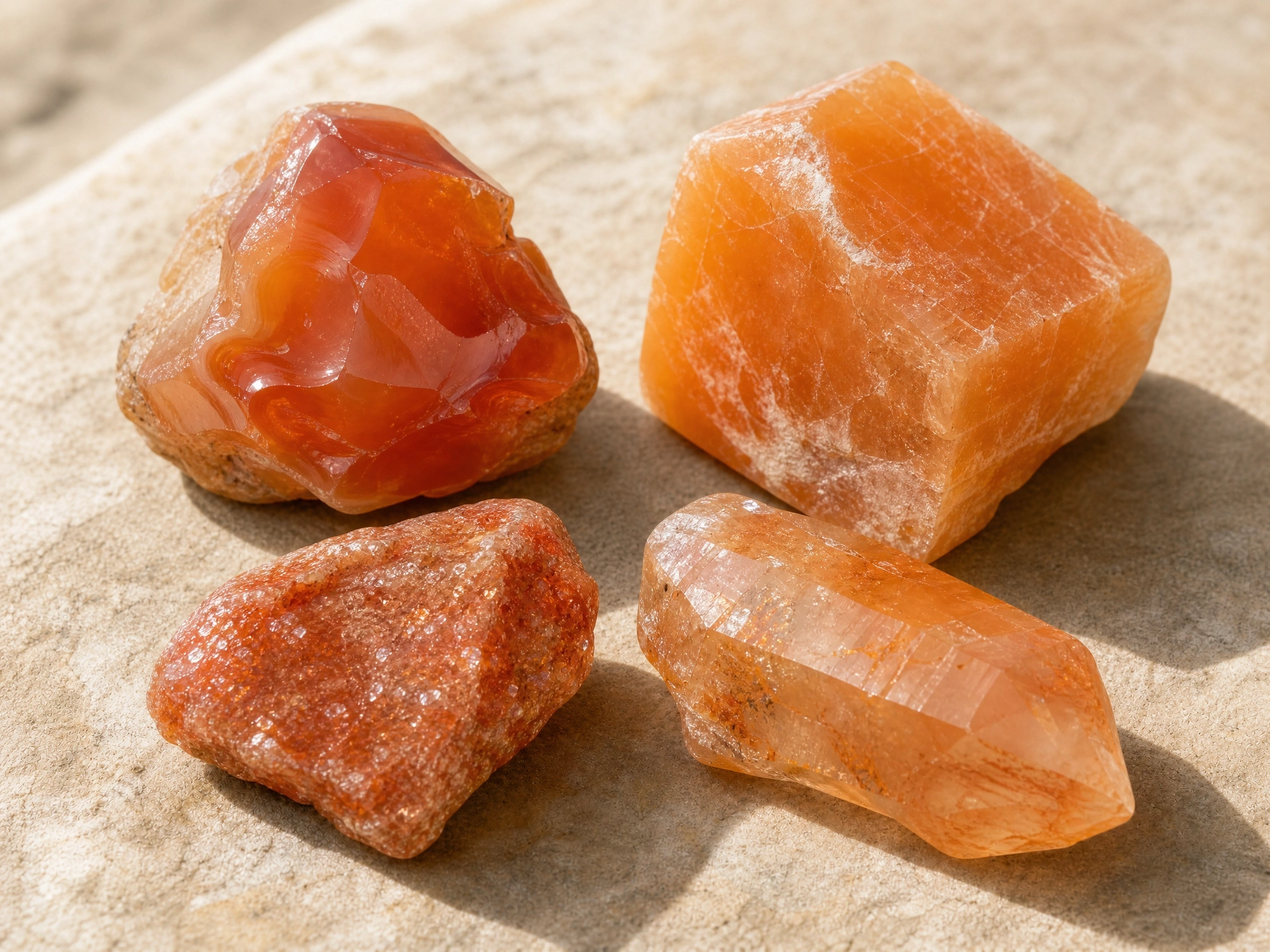
Carnelian, orange calcite, sunstone, and tangerine quartz are familiar orange crystals. Orange is commonly linked with creativity, joy, optimism, movement, and personal momentum. Its appearance can change noticeably with transparency, polish, and lighting, so specimens are best viewed under neutral white light.
Yellow and Golden Crystals
Citrine, pyrite, tiger’s eye, and yellow fluorite may appear yellow or golden. Traditional crystal language often connects these colors with confidence, abundance, strength, clarity, and optimism. Metallic gold, however, is not the same as a yellow body color. Luster, hardness, structure, and professional testing should be considered alongside appearance.
.webp)
Green Crystals
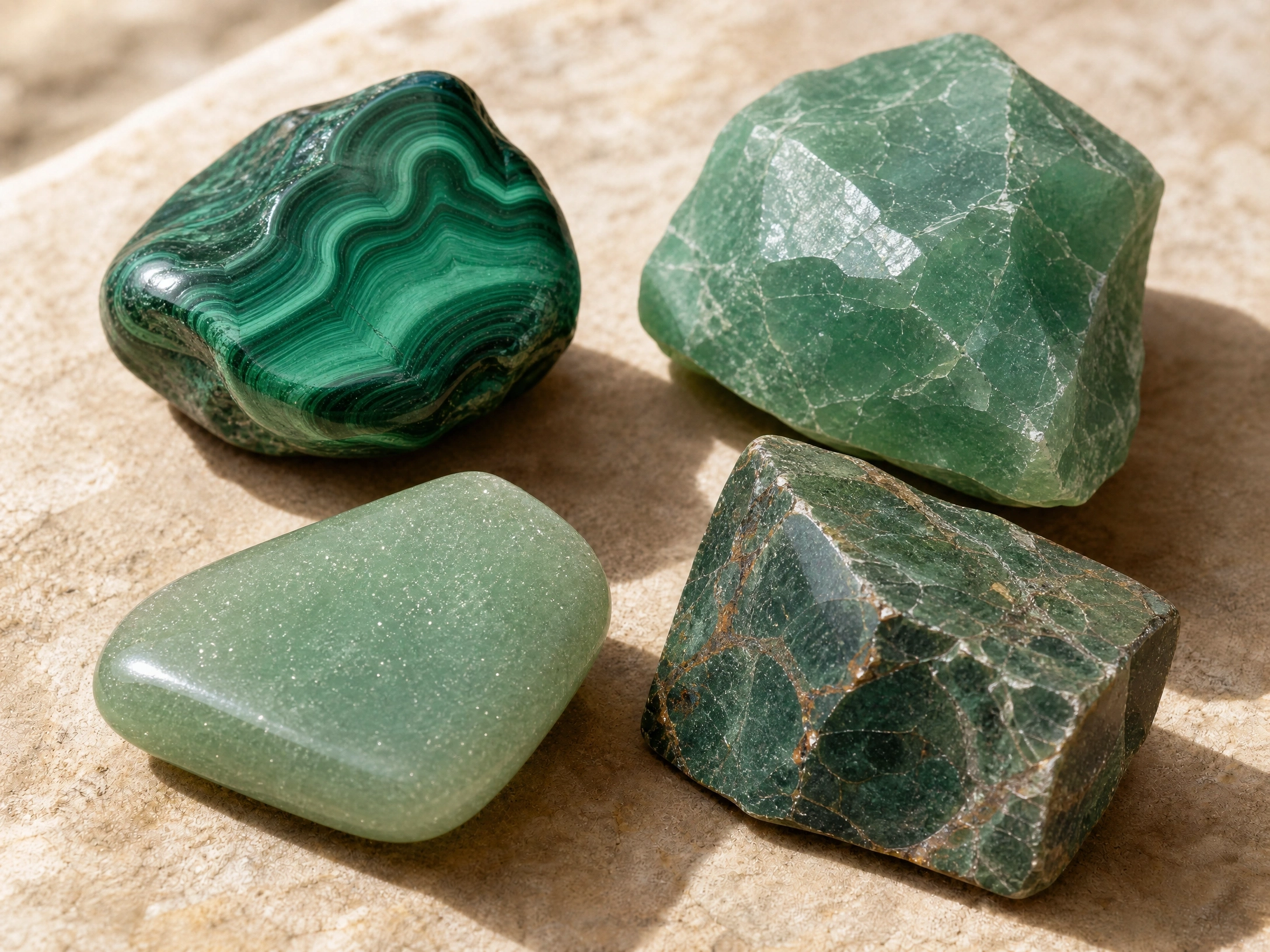
Malachite, green aventurine, jade, and green jasper are common green crystals. In crystal traditions, green is frequently associated with love, healing, harmony, balance, growth, and prosperity. Green minerals can nevertheless have very different causes and textures. Malachite may show distinctive banding, aventurine may display glittering inclusions, and jade has its own characteristic granular structure.
Blue Crystals
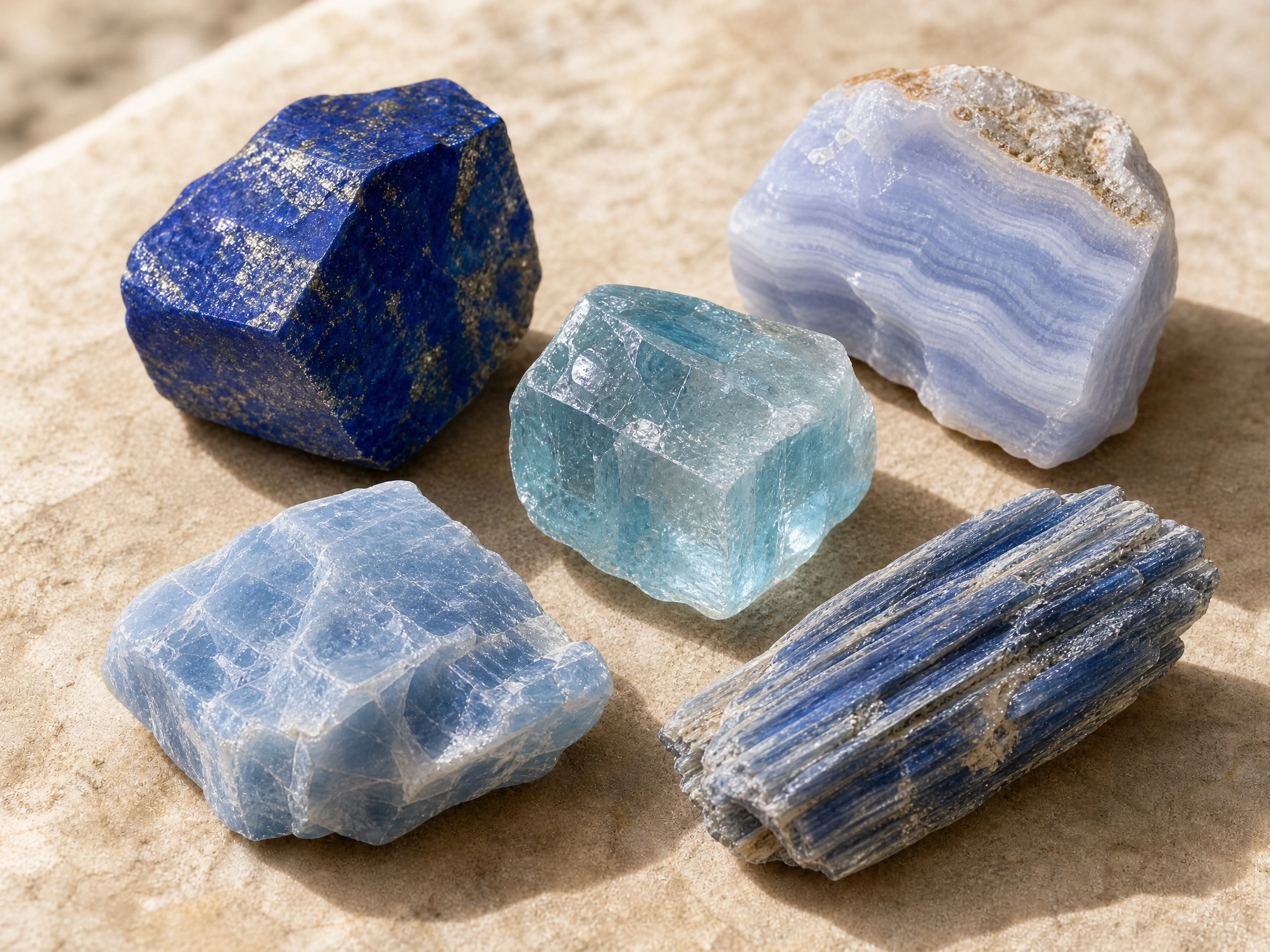
Lapis lazuli, blue lace agate, aquamarine, blue calcite, and kyanite are well-known blue crystals. Blue is often linked with calm, communication, expression, wisdom, and inner depth. Because lighting and transparency can strongly affect blue, buyers should also ask whether a specimen has been dyed, coated, or otherwise treated.
Purple and Indigo Crystals
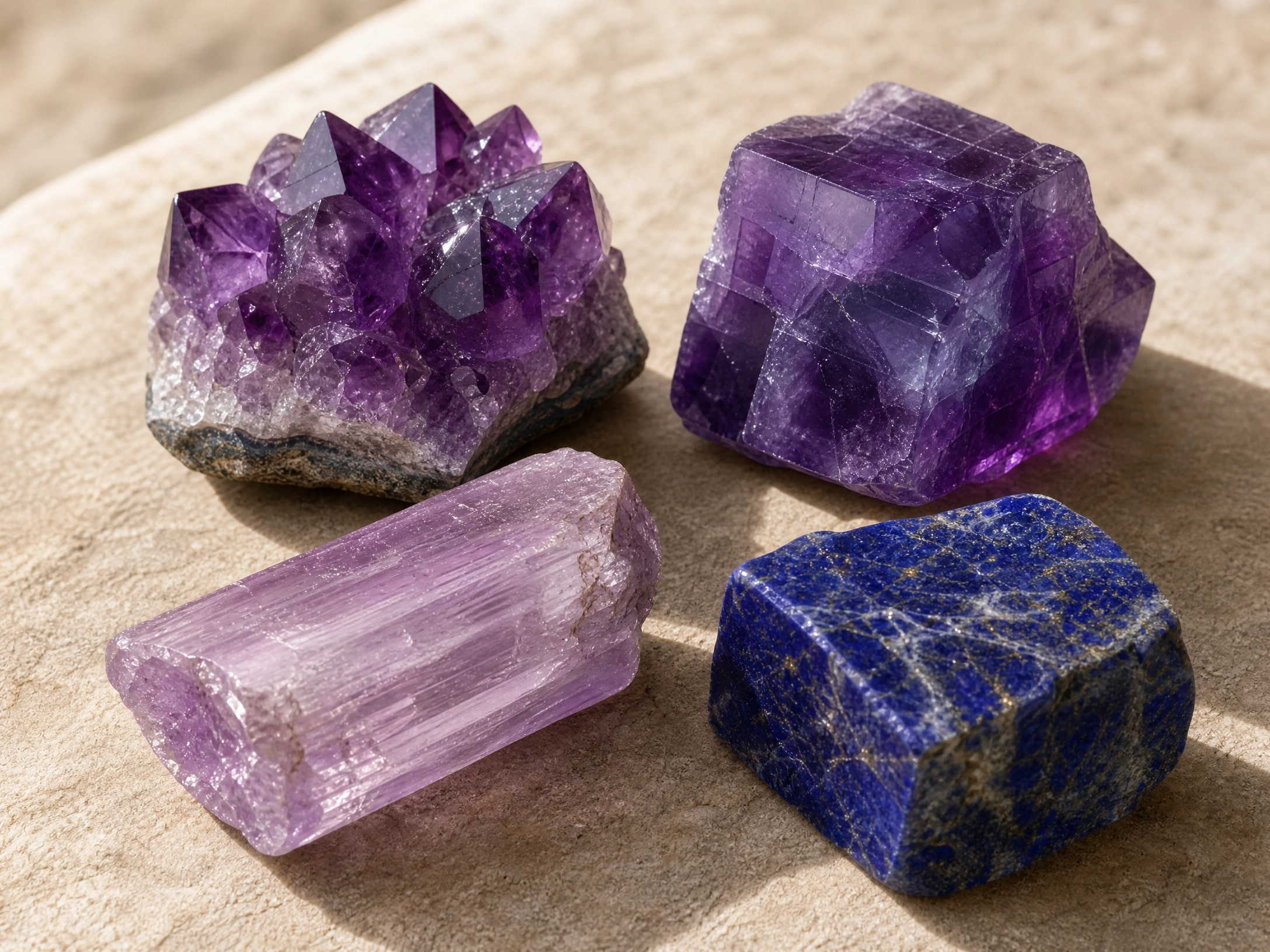
Amethyst, purple fluorite, kunzite, and lapis lazuli may display purple or indigo tones. Traditional associations include intuition, meditation, spiritual exploration, peace, and connection. Mineralogically, purple color may relate to iron, irradiation, lattice defects, or inclusions. Different purple minerals can have entirely different causes, so they should not be treated as interchangeable based on color alone.
Black, Brown, and Gray Crystals
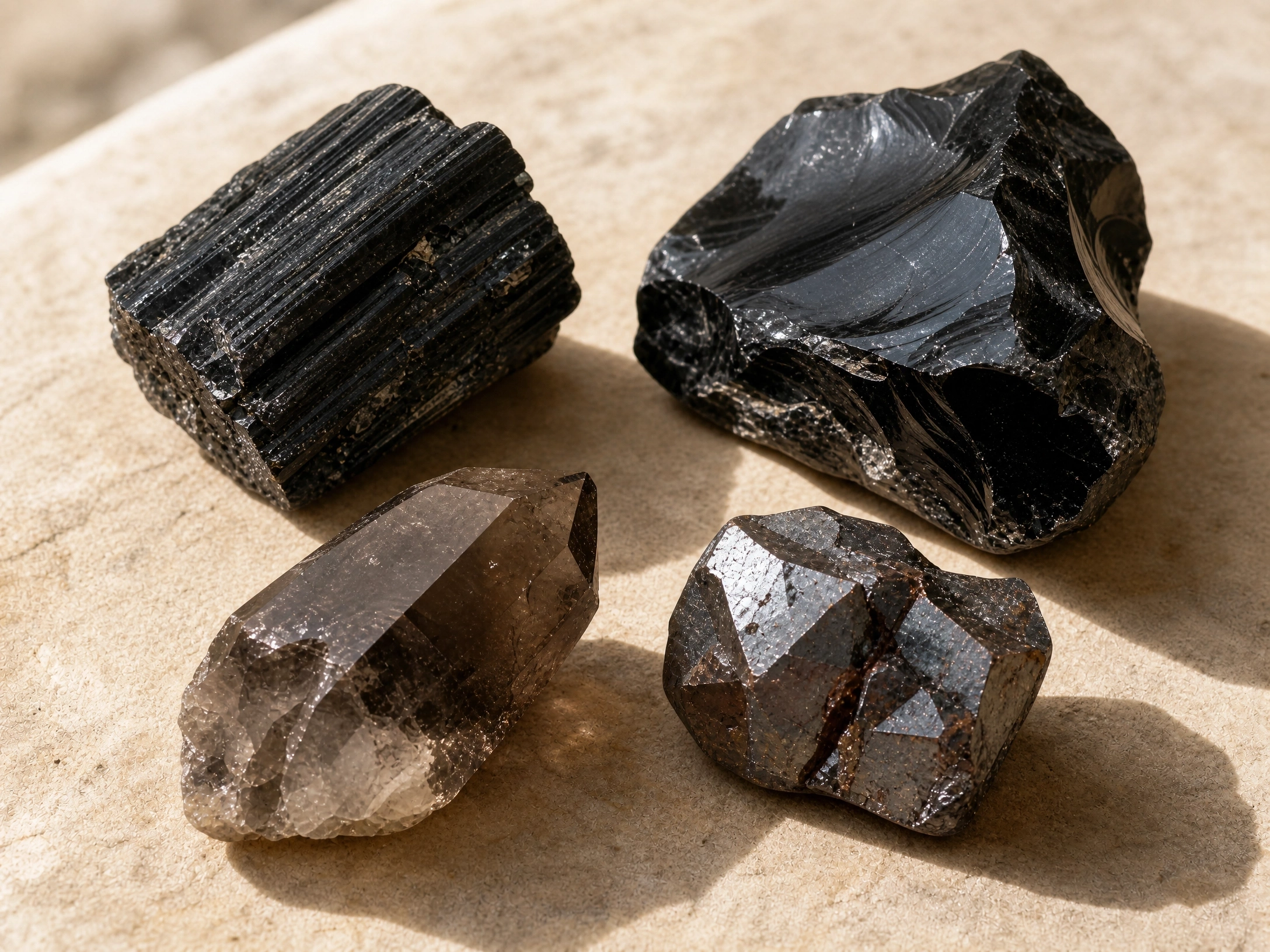
Black tourmaline, obsidian, smoky quartz, and hematite are common dark-colored crystals. Crystal traditions often associate black, brown, and gray with protection, grounding, stability, boundaries, and stillness. Because dark specimens tend to transmit less light, inclusions, surface luster, and polish are particularly useful features to inspect.
White, Clear, and Pink Crystals
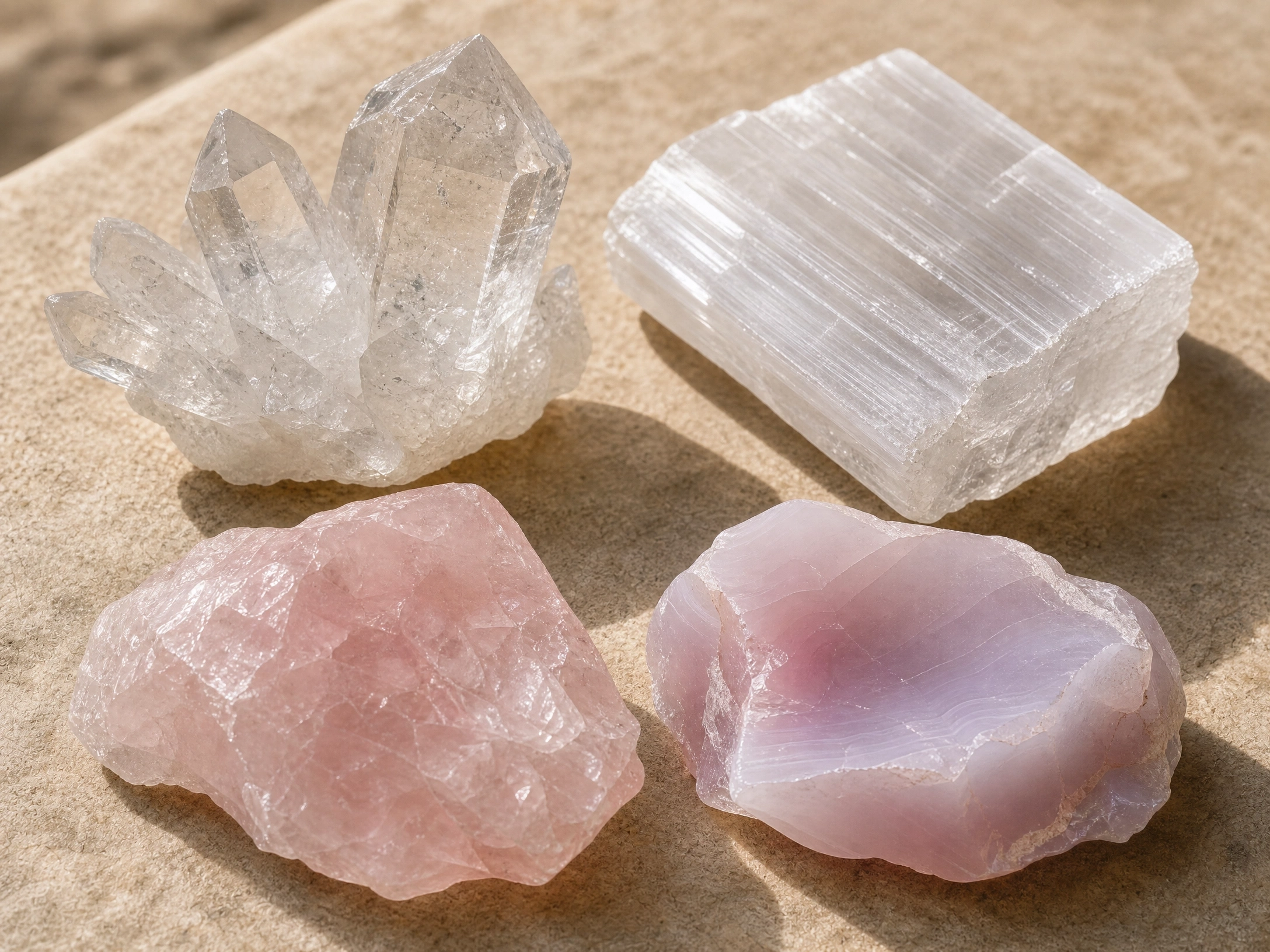
Clear quartz, selenite, rose quartz, and pink chalcedony are often given associations such as clarity, openness, softness, compassion, and self-acceptance. Transparency, cloudiness, fractures, and inclusions can all affect appearance. Greater clarity does not automatically mean that a specimen is more natural or more valuable; mineral identity, treatment, and overall quality still matter.
Why Can the Same Crystal Family Appear in Different Colors?
Color is not the same thing as mineral identity. The quartz family illustrates this well: clear quartz, amethyst, smoky quartz, and rose quartz look different, yet they are all related to quartz structures. Their colors can reflect trace elements, irradiation, lattice defects, inclusions, or differences in geological formation.
Natural specimens may also show zoning, patches, cloudy areas, fractures, or changes in transparency. These irregularities are not automatically flaws; they may be evidence of a complex formation history. At the same time, lighting can substantially alter perception. Daylight, warm indoor bulbs, jewelry-store spotlights, and smartphone white balance can make one stone appear more blue, yellow, or saturated than it really is. For comparison, inspect crystals under neutral white light and from multiple angles.
How to Begin Reading a Natural Crystal Through Its Color
Start with color as an observation tool, not as a final identification. Record the dominant hue, secondary colors, zoning, transparency, luster, crystal habit, and visible inclusions. Then combine those observations with hardness, cleavage, specific gravity, or professional testing. The Miles Mineral Museum emphasizes that color can be a useful diagnostic property for some minerals but highly variable and unreliable for others.
Next, distinguish natural color from enhancement or treatment. Heating, irradiation, coatings, dyeing, and resin filling may all change the appearance of a gemstone or mineral. When a specimen is unusually vivid or expensive, ask the seller about origin, treatment, and laboratory documentation. “It looks natural” is not a sufficient test of authenticity.
Finally, color can be used as a personal intention cue. A blue crystal might remind you to pause before speaking; a green crystal might prompt reflection on relationships and balance; a red crystal might bring attention back to action and bodily awareness. The value of this practice comes from symbolism, attention, and ritual—not from unverified medical promises.
Conclusion: Appreciating Natural Beauty Between Science and Symbolism
The color of a natural crystal is both a physical event and a human language. Chemical elements, lattice defects, inclusions, and microscopic structures reveal how a mineral formed. Color symbolism, chakra systems, and personal rituals reveal how people interpret and appreciate the natural world.
A thoughtful approach does not require choosing between science and spirituality. We can use mineralogical knowledge to understand a specimen, apply critical thinking to avoid exaggerated claims, and still allow color to bring beauty, personal meaning, and moments of focus. To understand natural crystals fully is to notice both where their colors come from and what those colors mean to us.


